WGC expects demand to revive in H2 on surplus monsoon rains

The government on Friday hiked import tariff value on gold to $401 per 10 grams and on silver to $543 per kg in line with global price trends.

Globally, jewellery buying fell 14%, investment slid 11%.

Indian overtakes China in gold consumption.

Replaces China as imports more than double to 204 tonnes in September quarter, with demand up 39%.

Official imports into India shrank almost 90 per cent in the six months to November

Gold schemes are offering attractive returns to investors.

Gold demand in India dropped by 30 per cent during the July-September quarter to 86.6 tonnes, compared to the same period last year due to Covid-19 related disruptions and ruling high prices, the World Gold Council (WGC) said in a report.

Those interested in investing in gold have shifted to instruments, such as sovereign gold bonds and gold ETFs. Many others are, in fact, selling gold or using it as collateral to generate short-term liquidity.

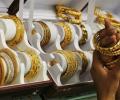
Indian jewellery is widely prized for intricacy and craftsmanship.

It rose to 310 tonnes in the second quarter ended June.

India imported 769 tonnes of gold in 2014, down from 825 tonnes in 2013.

The RBI is still a small player in international gold buying among central banks. But in terms of total gold bought in 2019, it is the sixth largest buyer with 25.2 tonnes purchases in the first 10 months of 2019.

Demand bounces back but uncertainty over GST rate for jewellery casts a shadow over future.

The Reserve Bank of India (RBI) has increased its gold purchases, as part of its foreign exchange (forex) reserves. In the first half (H1) of calendar year 2021 (CY21), the addition of gold to India's forex reserves has been the highest - on a half-yearly basis -at 29 tonnes. Now, the RBI's gold holding - as a proportion of its forex reserves - has for the first time crossed 700 tonnes.

Imports in 2016 expected to be lowest in 7 years but experts don't rule out a revival in demand if the yellow metal's price falls

Most consumers are going for token buying of lesser value and are waiting for price correction for purchase of wedding jewellery.

Dhanteras' buying seemed to have been sparked by the belief that prices would remain firm

The RBI on Wednesday eased gold import norms by allowing select trading houses, in addition to already permitted banks, to procure the precious metal to boost exports.

In domestic market, gold prices had peaked to Rs 39,011 per 10 grams in September and are now ruling at Rs 38,800 per 10 gram.

The rising price of the precious metal has helped the central bank increase overall forex reserves despite currency reserves not rising, and sometimes even falling.

Forecasts of a further rise in bullion prices keep Indians away from selling gold.

India's gold import bill, estimated at $3 billion in May, is seen falling further this month

Snapping the two months slide, the country's merchandise exports rose marginally by 0.5 per cent to $34.58 billion in September while trade deficit narrowed to $20.78 billion. According to official data released on Wednesday, imports increased by 1.6 per cent to $55.36 billion in September compared to $54.49 billion in the year-ago period. The trade deficit, or the gap between imports and exports, was $20.8 billion during the same month last year.

In the second half of April, the discount on gold came down to $3 an ounce.

The government has asked jewellers to provide information on purchases of gold bars or jewellery worth more than Rs 500,000 by the end of this month, a move seen keeping a check on big transactions amid rising smuggling.
Gold hallmarking is a purity certification of the precious metal and is voluntary in nature at present.

Gold demand in rural India is expected to be lower this year with weak monsoon affecting household savings, according to the World Gold Council (WGC).
Consumers have to watch out for four marks on hallmarked gold jewellery: BIS mark, purity in carat, assay centre's name and jewellers' identification mark.

Import is returning to the normal prevailing three years ago

Based on the estimate, a courier bringing in 1 kg of gold currently worth around $40,000 at world prices could earn $470 if not caught.

Custom authorities have been keeping strict vigil on the cargo movements from Bhutan, Taiwan, China, Afghanistan, South Korea Japan, and Dubai since January.

In April and May, there were additions by RBI of 600 kg and 900 kg. RBI's total gold holding is now 561.9 tonnes.

Regaining the lost sheen, sales of gold jewellery and coins are set to touch pre-COVID levels in volume terms on the auspicious Dhanteras as easing pandemic concerns and pent up demand saw consumers flocking to stores to buy the precious metal. Increased footfall at stores and brisk sales online as well as relatively softer gold prices compared to record Rs 57,000 per 10 grams level in August spurred increased buying, especially light weight offerings, on Tuesday. Dhanteras is considered to be auspicious for buying precious metals and other valuable items.

Gold demand in India is expected to be robust in 2014, likely leading to a further jump in smuggling if curbs on bullion imports remain, the World Gold Council (WGC) said.

The overall third quarter demand in the country for 2013 stood at 161.6 tonnes, WGC Gold Demand Trends report showed.
This is good news for the central government at a time when crude oil prices are rising.
Gold, which lost its sheen to some extent in the second half of 2021, is likely to regain the glitter in the New Year and cross the Rs 55,000-per-10-grams level amid pandemic woes, inflation worries and stronger US dollar. After a stellar run up in 2020 when the yellow metal touched a record high of Rs 56,200 on the MCX in August, the prices are near Rs 48,000 per 10 grams now. This is roughly 14 per cent lower from the all-time highs and 4 per cent lesser compared to January 2021 levels.

The second day of pre-Diwali Dhanteras witnessed a tepid response from shoppers on Friday as gold and silver sales have likely to be fallen by up to 35 per cent year-on-year due to high prices and COVID-19 induced financial distress, although consumers moved to online buying to make most of the festival, jewellers said. The buying was heavily restricted to light weight jewellery, coins and precious stones due to lower purchasing power and high gold rates, they said. Due to the fear of coronavirus infection, many customers who had booked in advance were taking delivery of wedding orders on Friday, while some were seen buying safely through online brands like Tanishq and Melorra.

'Curbs will again lead to the grey market developing, undoing all the work done over the last two-and-a-half years.'
 © 2026 Rediff.com - Advertise with us - Disclaimer - Privacy Policy - Sitemap - Feedback - About us - Terms of use - Grievances